Realistic Photography — GPT Image 2 prompt template
Photography & Realism · Photography · Realistic · Lens
A photographic brief in prompt form: camera distance, lens, light source, surface texture, background and motion, written the way a shot list is.
Lens, lighting, film texture, and documentary-style photo prompts. It is the default for portraits, street work, product photography and cinematic frames when "photorealistic" alone keeps returning something that looks rendered.
When to use it
Use for portraits, street photos, product photography, and cinematic realism. It sits in the Photography & Realism group of the catalog, which covers portraits, phone photography, film texture, and commercial photography. If your brief is closer to one of the neighbouring genres, the related templates at the bottom of this page are the faster route — picking the right template matters more than perfecting the wrong one.
The template
Copy the block, replace everything inside brackets with your own specifics, and delete any line that does not apply to your brief. The template text is published in Chinese, as it appears in the upstream catalog; the structure is what carries the value, so translating the labels into your own language changes nothing about how it works.
拍摄主题:[人物/物品/街景],场景为[地点]。
摄影参数风格:[35mm/85mm],[浅景深/深景深],[纪实/电影感]。
光线:[自然光/夜景霓虹/逆光],情绪:[情绪词]。
细节要求:[肤质/材质/颗粒感]。
输出:高写实摄影风格图像。
JSON version (agent-friendly)
Every Photography & Realism template shares one JSON block, which expresses the same kind of decisions as key–value fields rather than prose. Use it when a script, an agent or a form fills in the values, or when you want to change a single field between runs and see exactly what changed; swap the example values for your own.
{
  "type": "Hyper-realistic Photography",
  "subject": {
    "description": "A weary 30-year-old barista wiping a coffee cup",
    "details": "Subtle sweat on forehead, detailed skin pores, wearing a denim apron"
  },
  "setting": "Dimly lit vintage cafe, rain visible through the window behind",
  "camera_specs": {
    "gear": "Shot on Sony A7R IV, 50mm lens",
    "aperture": "f/1.4 (shallow depth of field, background completely blurred)",
    "lighting": "Cinematic lighting, neon sign reflecting on wet window, soft rim light on subject's hair"
  },
  "film_aesthetic": "Kodak Portra 400 emulation, subtle film grain"
}
How to fill it in
The block above asks you to make 8 explicit decisions before you send anything. That is the point of a template: the decisions you do not make are made for you, and in image generation the defaults are what produce work that looks generic.
Fill the optical slots like a photographer would: distance from the subject, focal length, the quality and direction of the light, and what the background does at that aperture.
Then add the imperfections that make a photograph read as one — grain, slight motion, an uneven surface, an off-centre framing. Documentary realism is mostly a list of things that are not perfect.
- Specify camera distance, lens, light source, texture, background, and motion.
- Use believable imperfections for documentary realism.
A working order for the whole thing: fill the structural slots first (subject, layout, format), then the visual ones (palette, light, material), then the text that has to appear verbatim, and only then the mood words. Run it once, change one field, run it again — a template you iterate one variable at a time tells you which variable did the work, which a rewritten prompt never does.
Common mistakes
Over-polished skin is the tell that an image was generated; unless you are briefing commercial beauty, ask for texture and let the retouching be minimal.
Hands, text and anatomy still need explicit negative constraints when they matter to the frame. Adding them costs a line and saves a regeneration.
- Avoid over-polished plastic skin unless commercial beauty is required.
- Add negative constraints for hands, text, and anatomy when needed.
Example results
These are the public posts this template was distilled from: the creator shared the image and the prompt behind it, and the recurring structure across cases like these became the block above. Each card links back to its source, and a public post is not a licence to reuse the image.
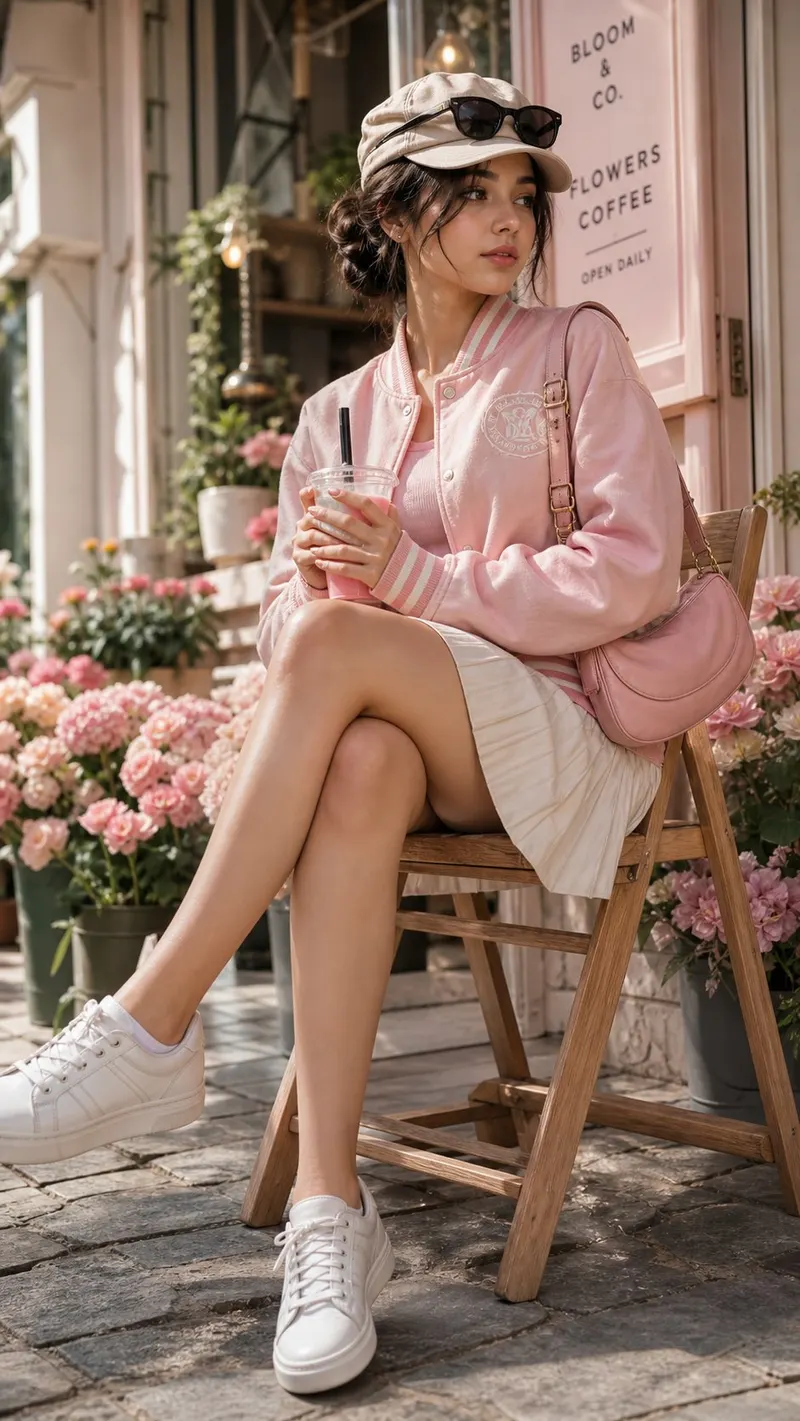
樱花咖啡户外人像
Edit the provided image while preserving the same face identity, shape, and facial features without altering age, ethnicity, or structure. Maintain a calm, rela

More templates in this category
The catalog keys its blocks by category, so every Photography & Realism template ships with the same set of 3. The one above is the block that matches this template; these 1 are its neighbours, kept here in case one of them is closer to your brief.
Street candid-moment photography template
生成一张竖版手机纪实照片,主题是[意外事件/日常瞬间]发生在[街头/室外地点]。
主体:[物品/人物动作/现场痕迹],必须呈现真实的材质状态,例如[液体扩散/冰块散落/纸张褶皱/灰尘颗粒]。
环境:[地面材质/墙面/街景元素],保留自然杂乱和生活痕迹。
光线:[正午强光/阴天散射光/夜间路灯],阴影要符合真实方向,可加入[人物影子/路牌影子/树影]。
镜头:手持手机视角,略微俯拍或低角度,构图自然,像随手拍到的现场。
画面质感:raw unedited photo look,自然色彩,真实纹理,高细节。
负面约束:不要插画、动漫、CGI、棚拍光、过度干净、过度构图、假液体、漂浮物、品牌文字、水印、海报设计感。
输出:一张可信的日常纪实摄影图。
Related templates
- Street Accident Moment — Realistic phone-photo scenes with negative constraints.
- Illustration & Art Style — Anime, watercolor, ink, material experiments, and art direction.
- Character Design Sheet — Characters, pose sheets, action grids, and identity consistency.
- 3D Collectible Toy — Reference photo to premium 3D collectible figure prompts.
- Scene Storytelling — Storyboards, worldbuilding, narrative scenes, and emotional pacing.
Frequently asked questions
- Does naming a specific lens actually change the image?
- Naming a focal length and distance is a compact way to describe compression, framing and depth of field, and those are the things you are really asking for. Write the effect too if the result matters — "tight framing, background thrown out of focus".
- How do I avoid the glossy AI look?
- Ask for texture and imperfection explicitly: skin detail, uneven light, a background that is not immaculate. The default aesthetic is polished, so realism has to be requested.
- Is the Realistic Photography template free to use?
- Yes. The template text comes from the open-source awesome-gpt-image-2 catalog by freestylefly, published under the MIT licence, and PicGens reproduces it with credit. Copy it, fill in the brackets and paste it into whichever tool you run GPT Image 2 in.
- What is the JSON version of the template for?
- It carries the same decisions as key–value fields instead of prose, which is easier for an agent or a script to assemble programmatically and easier to diff when you iterate. Use the plain-text block when you are writing by hand and the JSON block when something else is filling in the values.
- Why does this page show other Photography & Realism templates?
- The upstream catalog groups its blocks by category, so every Photography & Realism template ships with the same set of 3 blocks. The one at the top of this page is the block that matches this template; the remaining 1 are kept collapsed in case a neighbouring variant fits your brief better.
- Where do the example results come from?
- They are public posts by creators who shared both the image and the prompt behind it, collected in the same open catalog. Each one links back to its source, and a public post is not itself a licence to reuse the image.
中文说明
写实摄影 — 控制镜头、光线、胶片质感和纪实摄影效果。
用于人像、街拍、商品摄影和电影感写实。
- 指定机位、镜头、光源、质感、背景和动作。
- 加入可信的小瑕疵增强纪实感。
- 商业美妆之外,避免过度磨皮。
- 需要时加入手部、文字、结构类负面约束。
Keep exploring
Template text and case metadata from awesome-gpt-image-2 by freestylefly, used under the MIT licence. English commentary by PicGens. Results vary by model version, reference image and settings.